Wales - Skomer Island
Puffins - Built for the Edge of the World
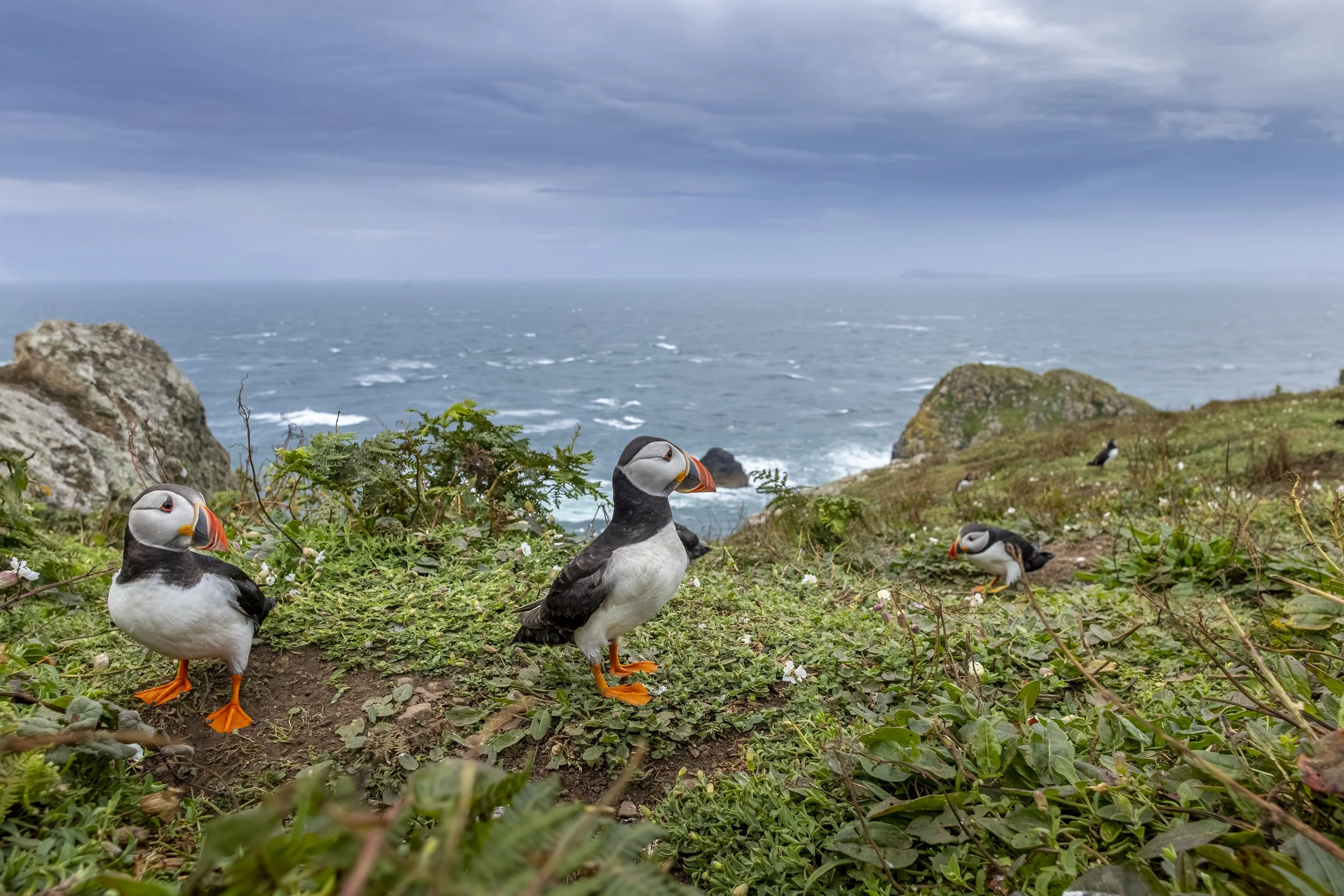
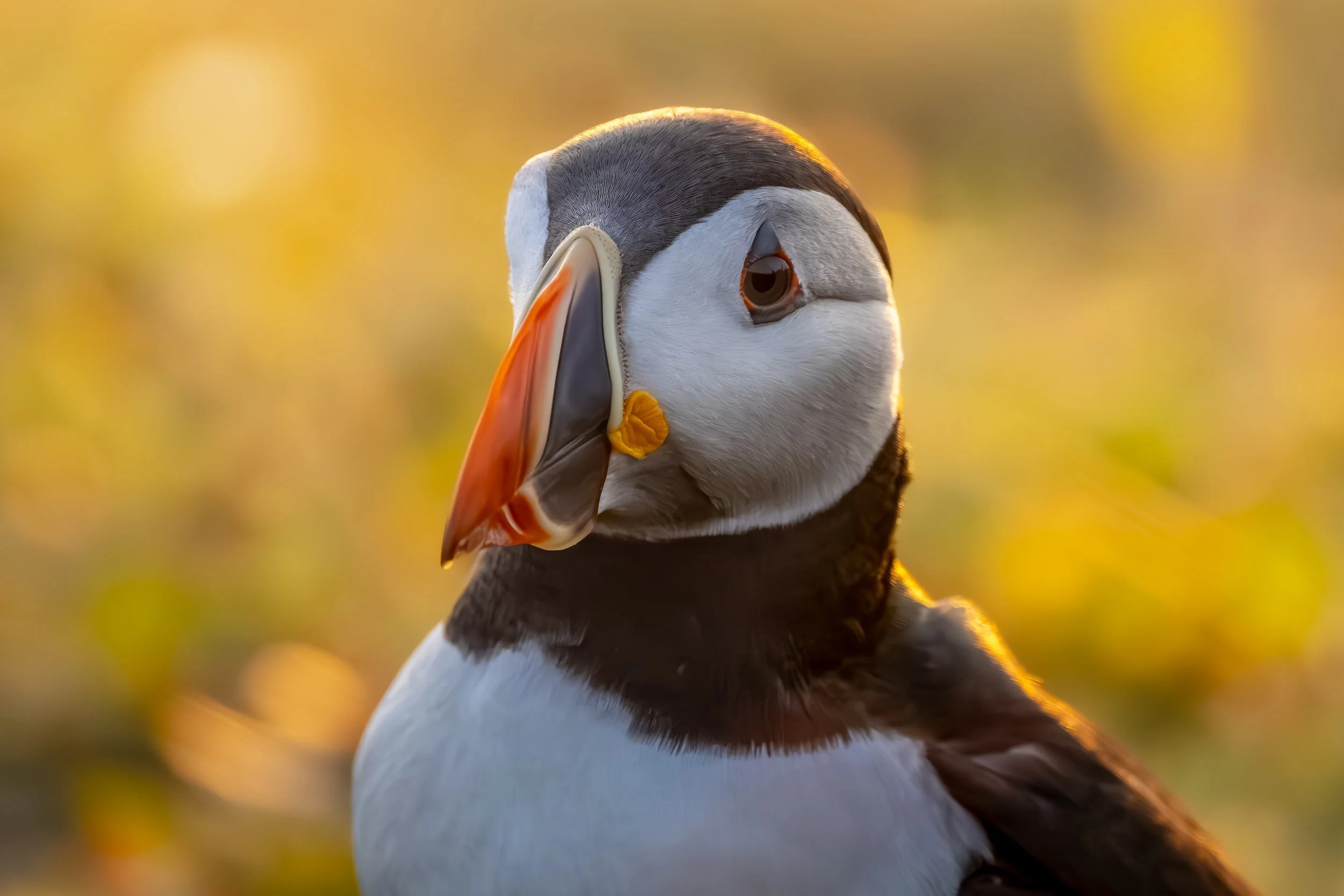
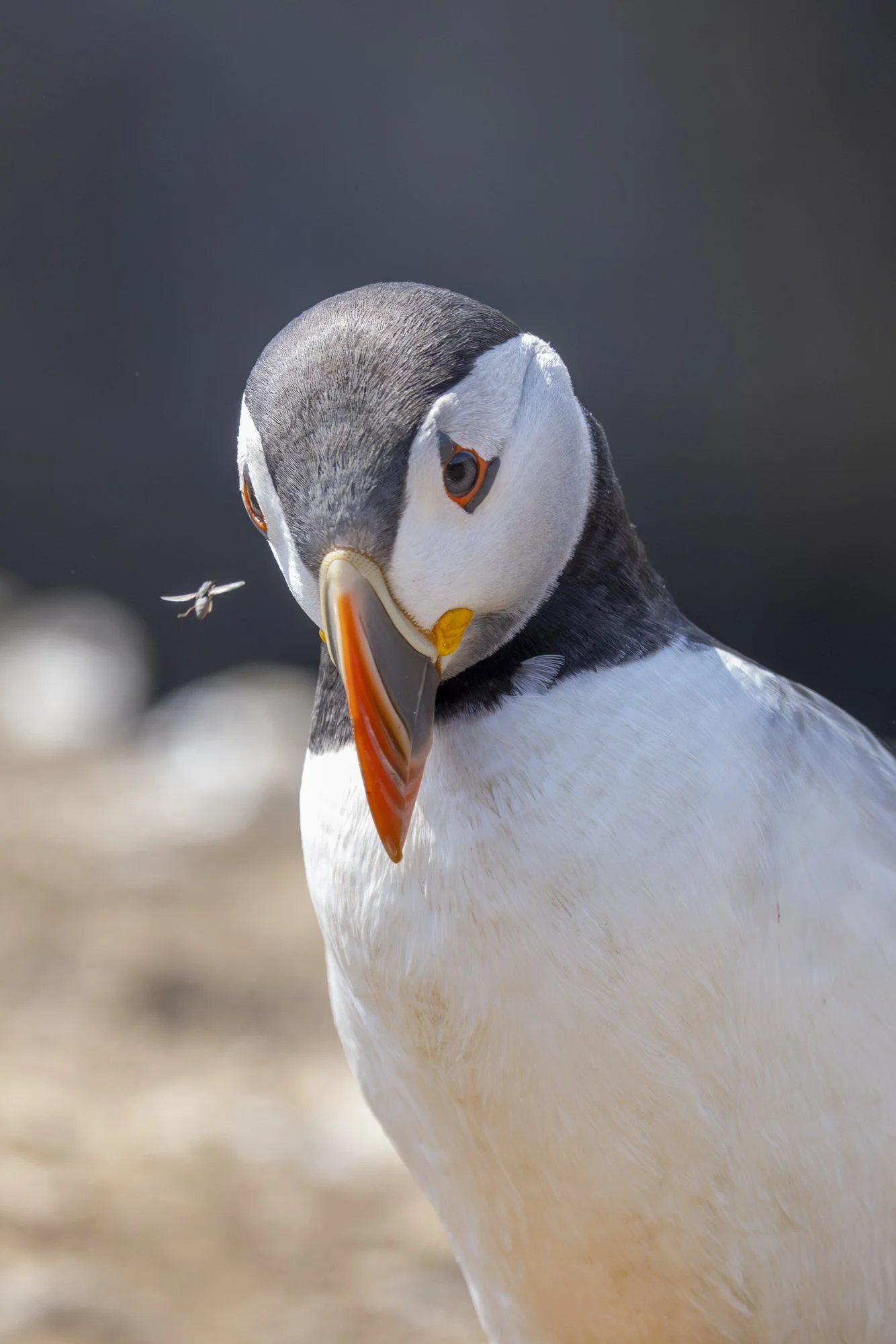
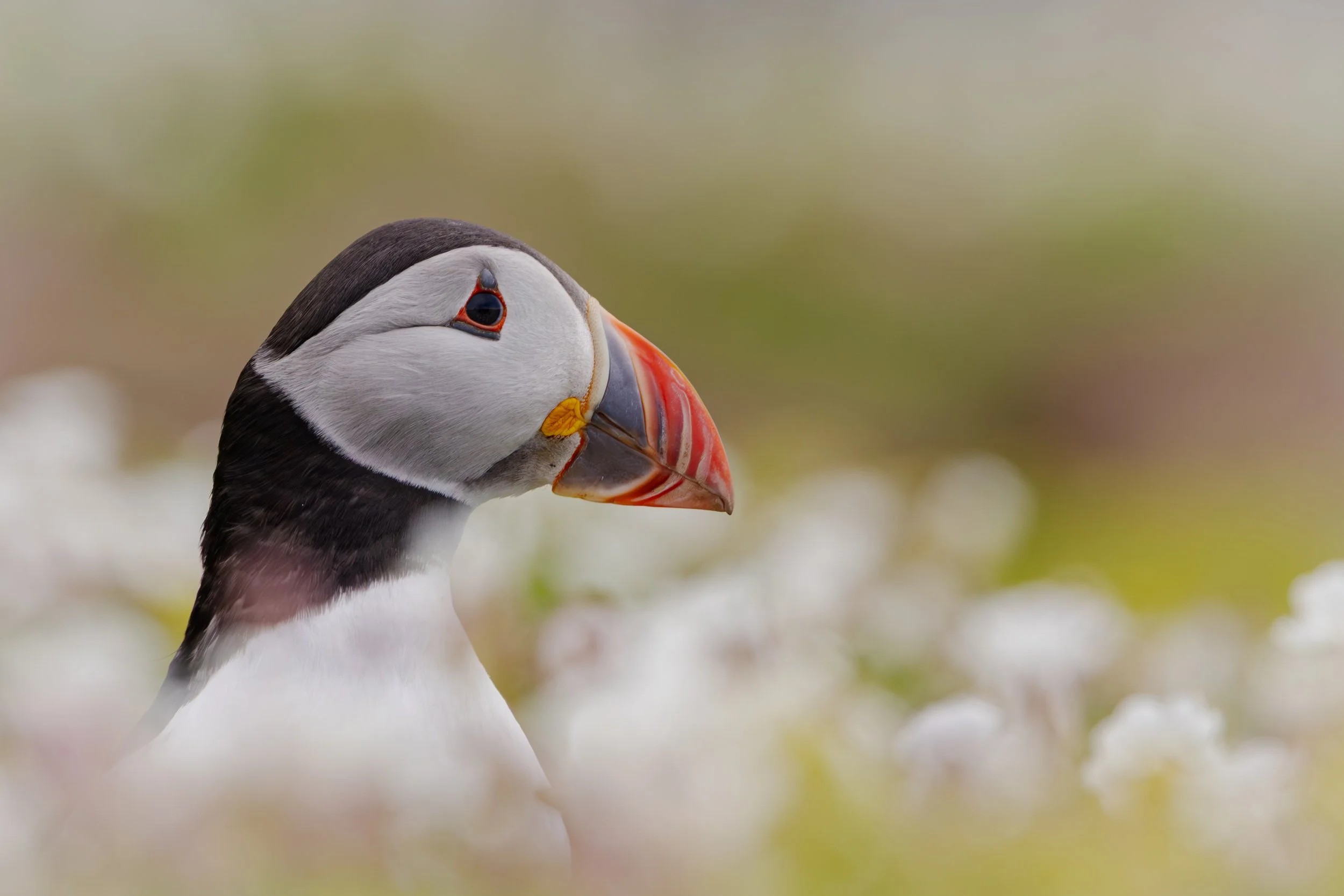
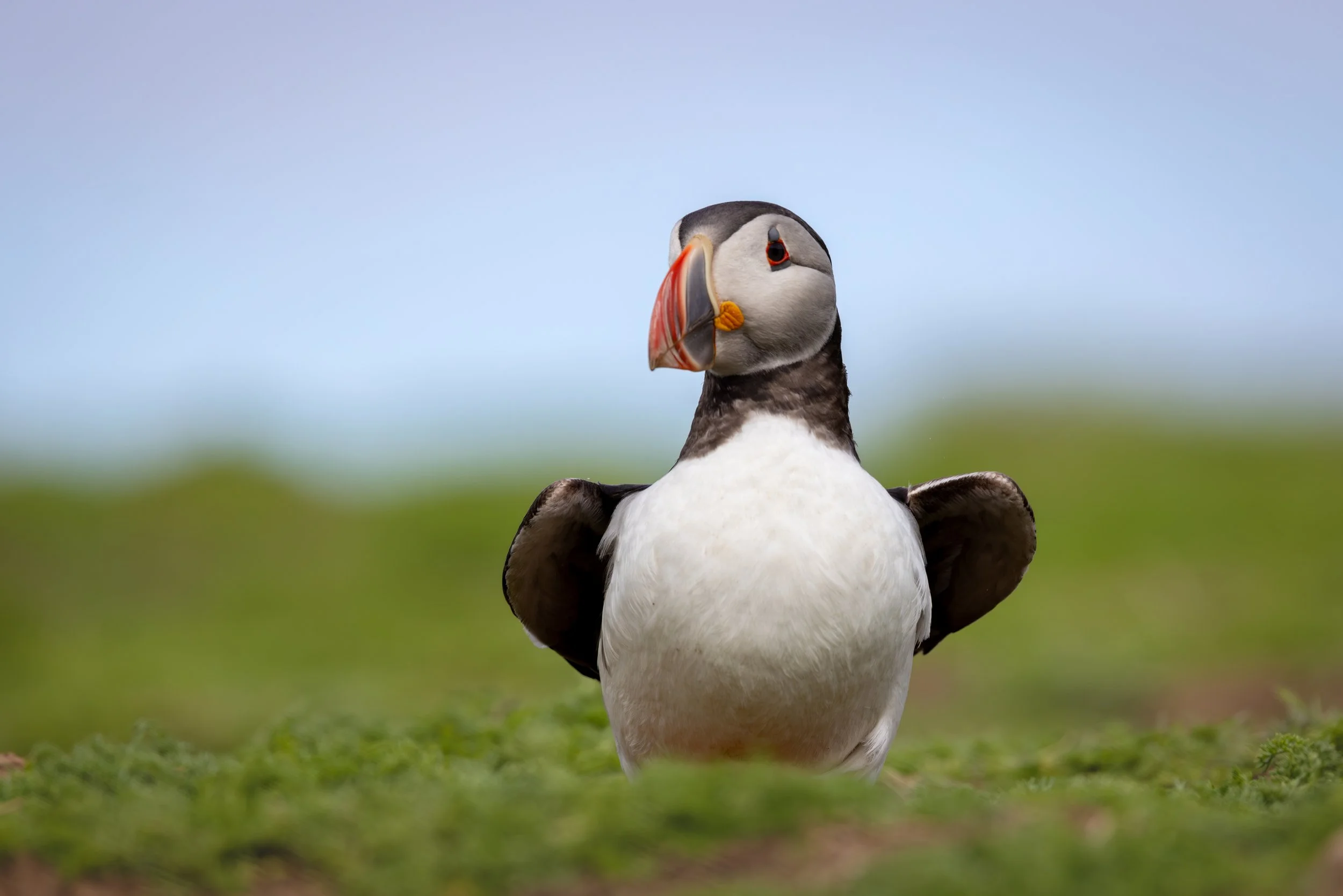
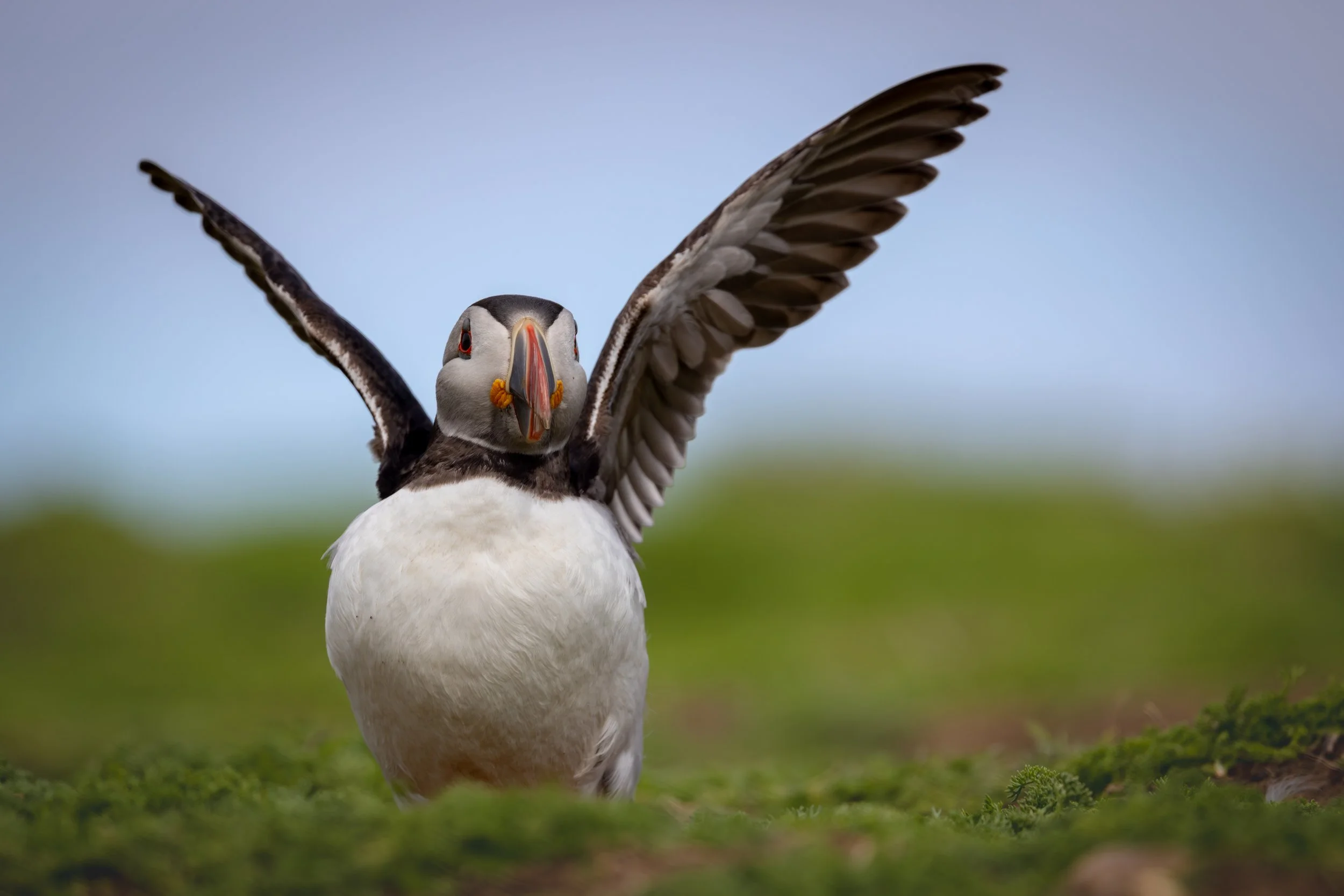
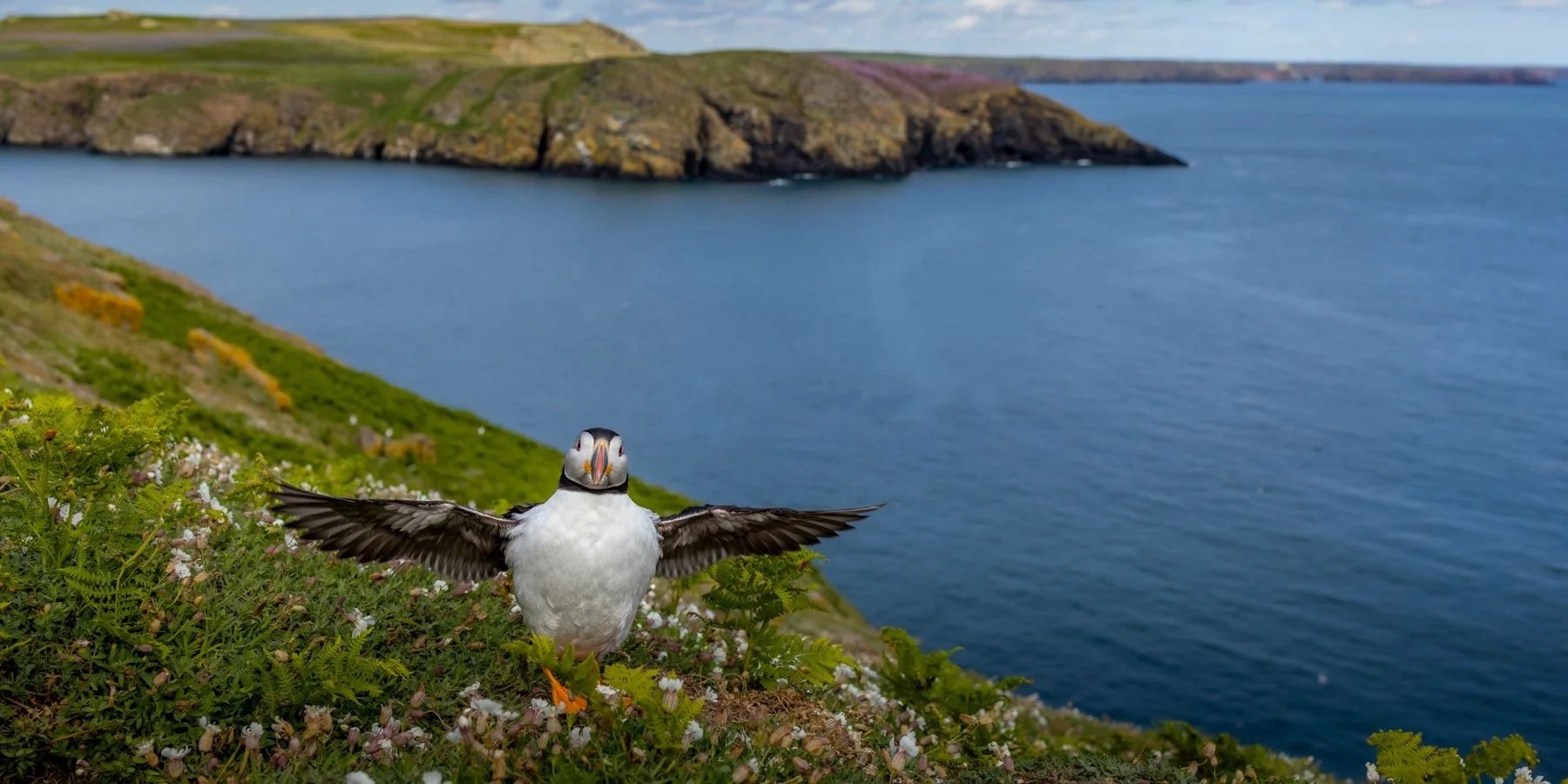
Along the cliffs of Skomer Island, Atlantic puffins return each spring to a landscape shaped by wind, sea and narrow margins of survival. Beneath their familiar appearance lies a highly structured colony life defined by timing, precision and constant movement between ocean and burrow. By following the same colony over several seasons, these photographs reveal behaviours and relationships that are easy to overlook in a single encounter. These photographs follow quieter rhythms within the colony — arrivals heavy with fish, territorial tension, brief encounters at nesting sites and the fragile balance between exposure and shelter along the Atlantic edge.
Puffins - Built for the Edge of the World
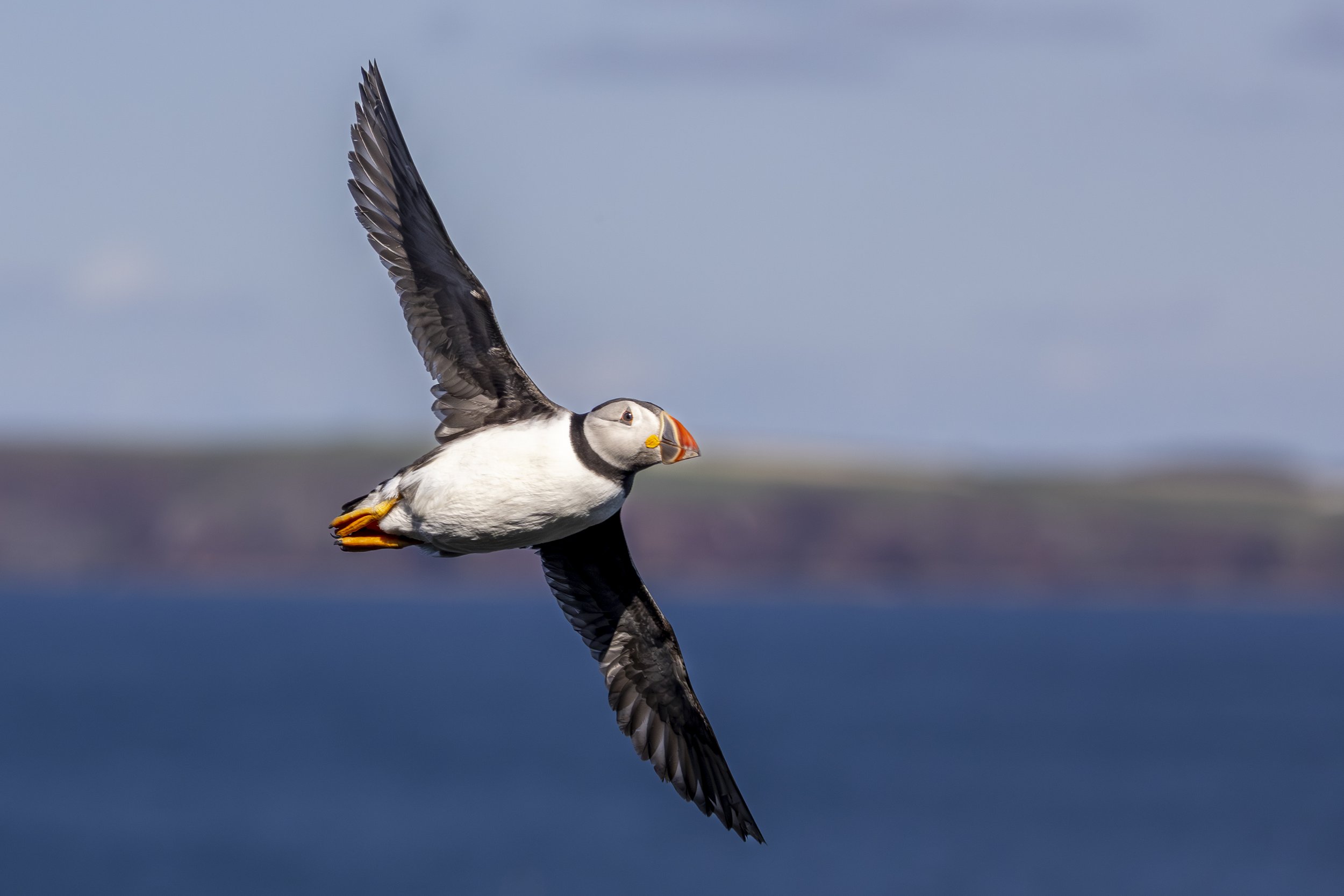
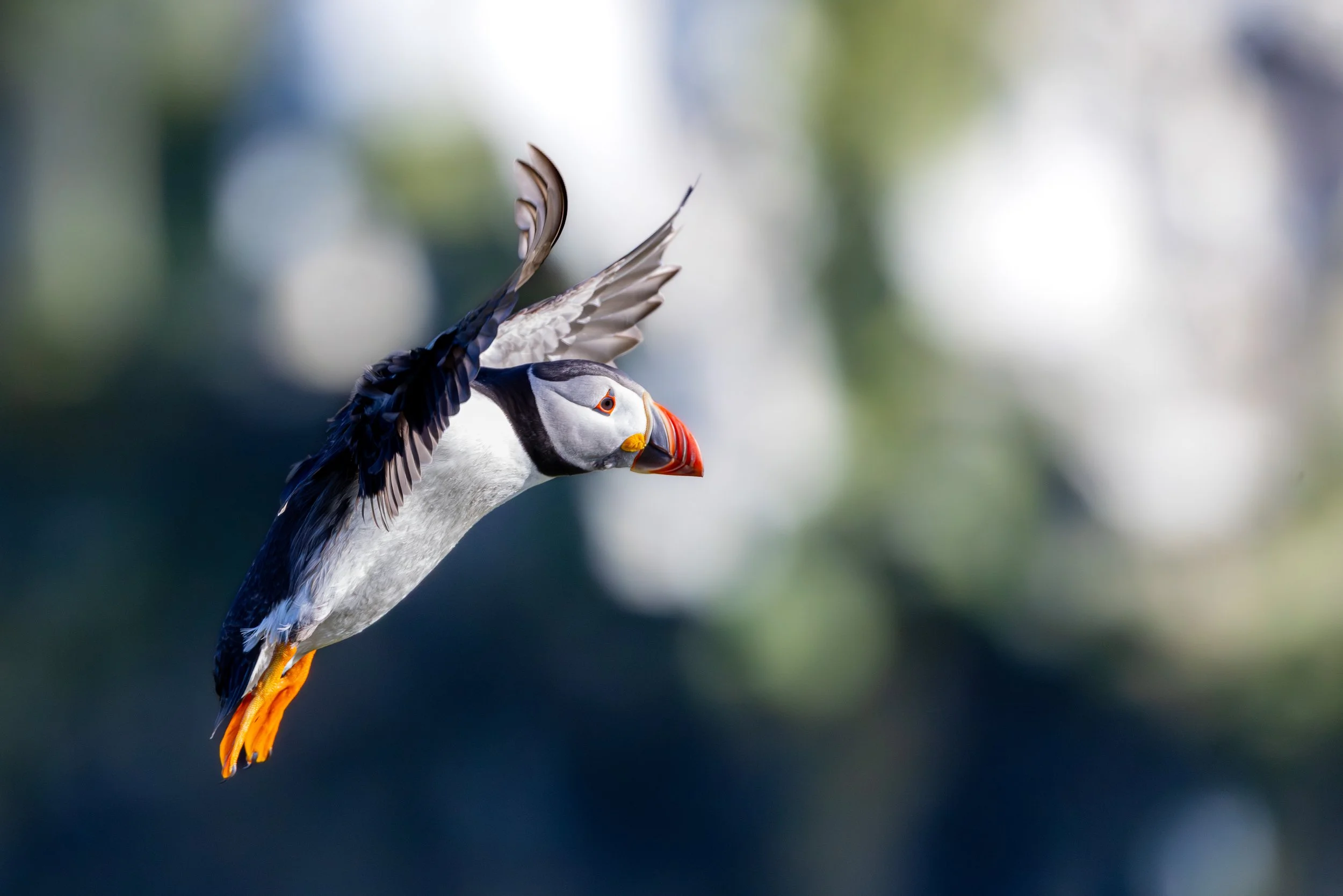
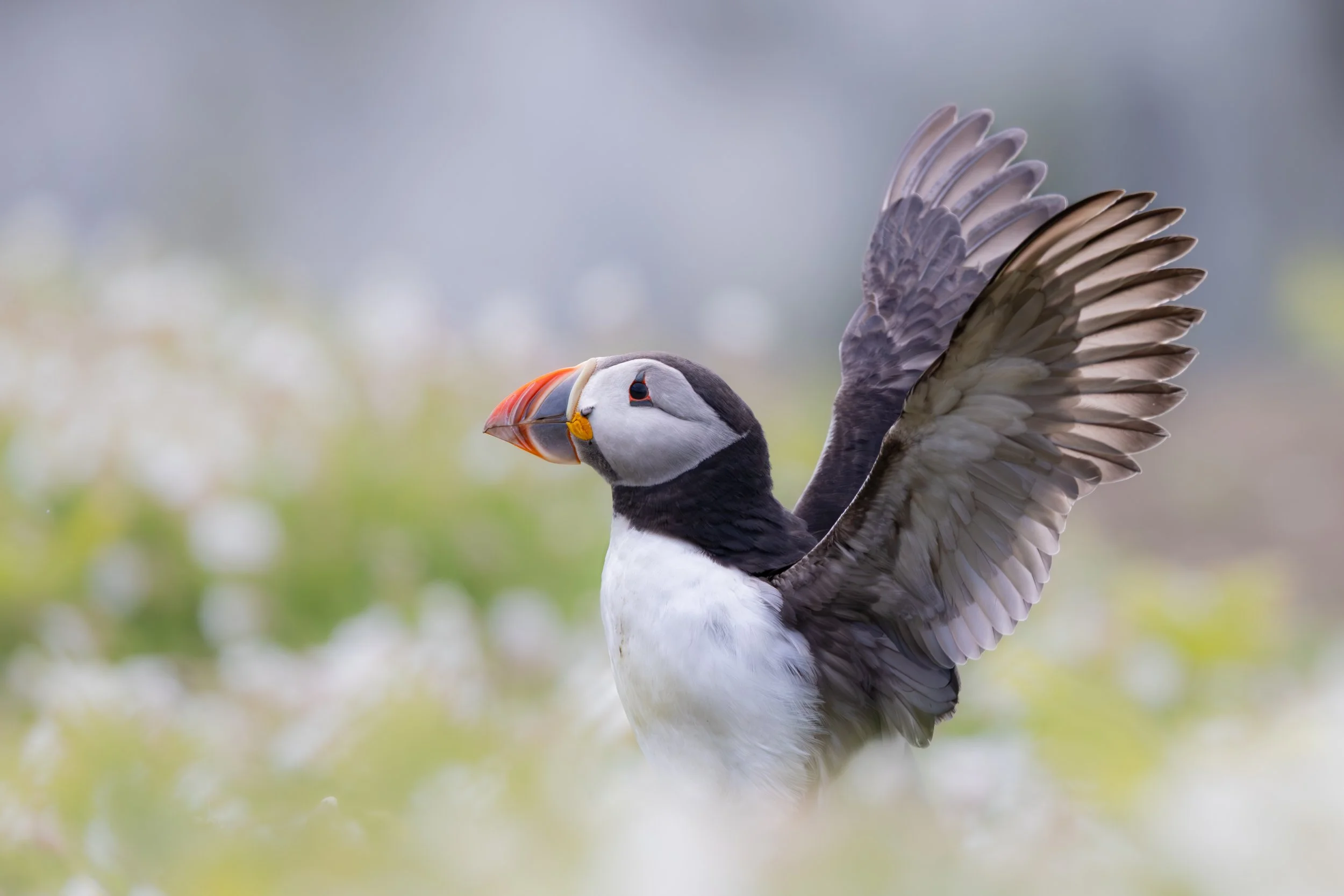
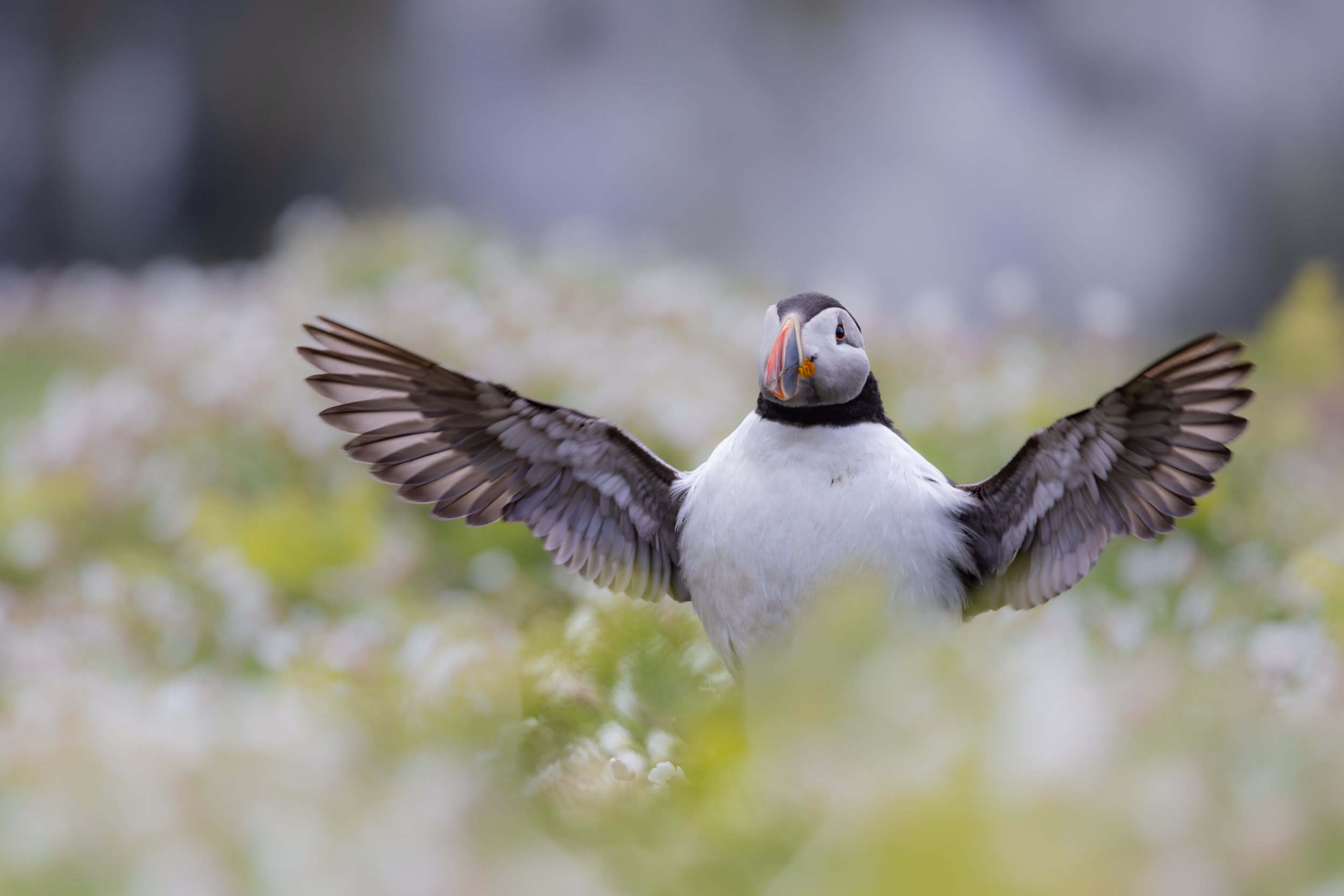
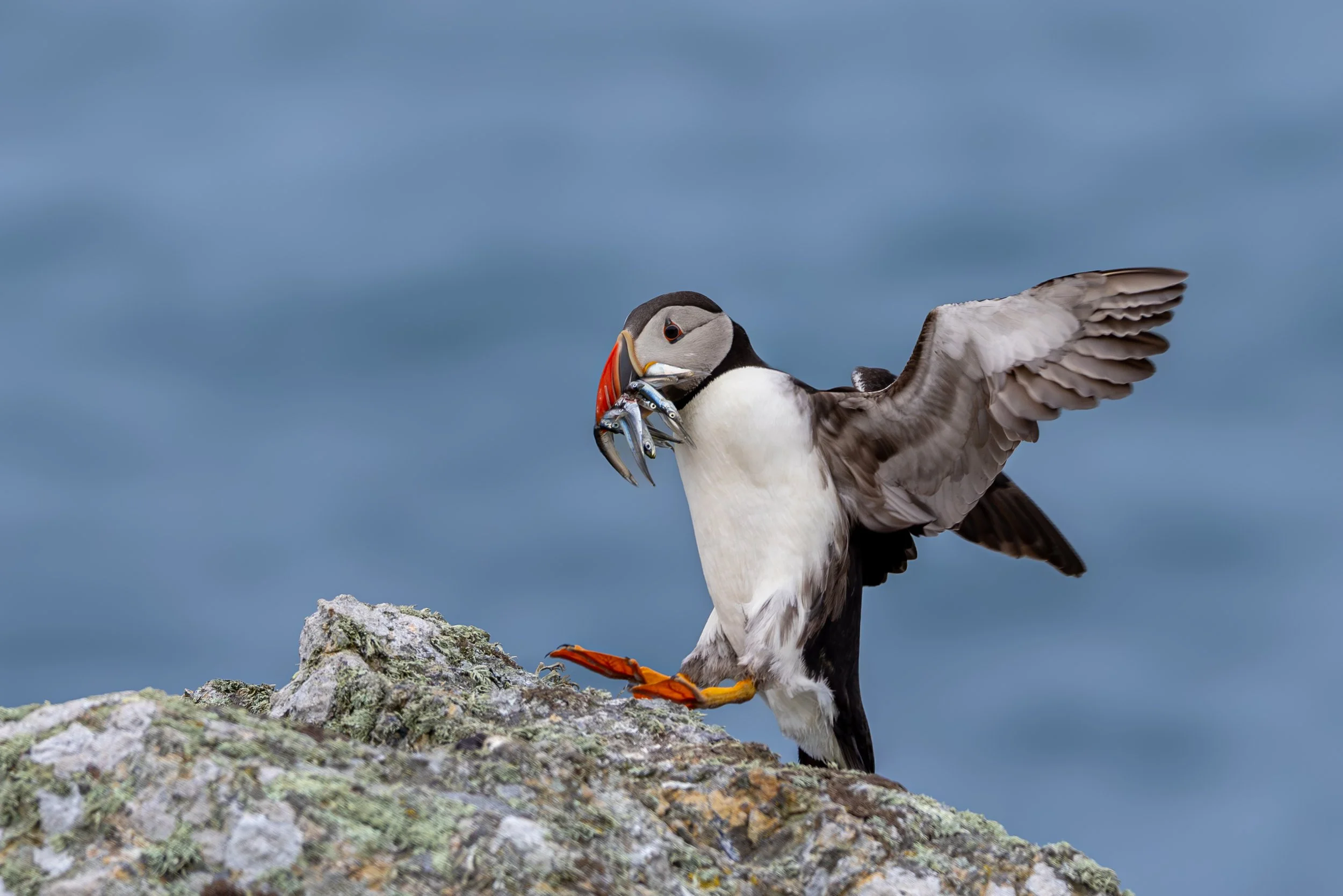
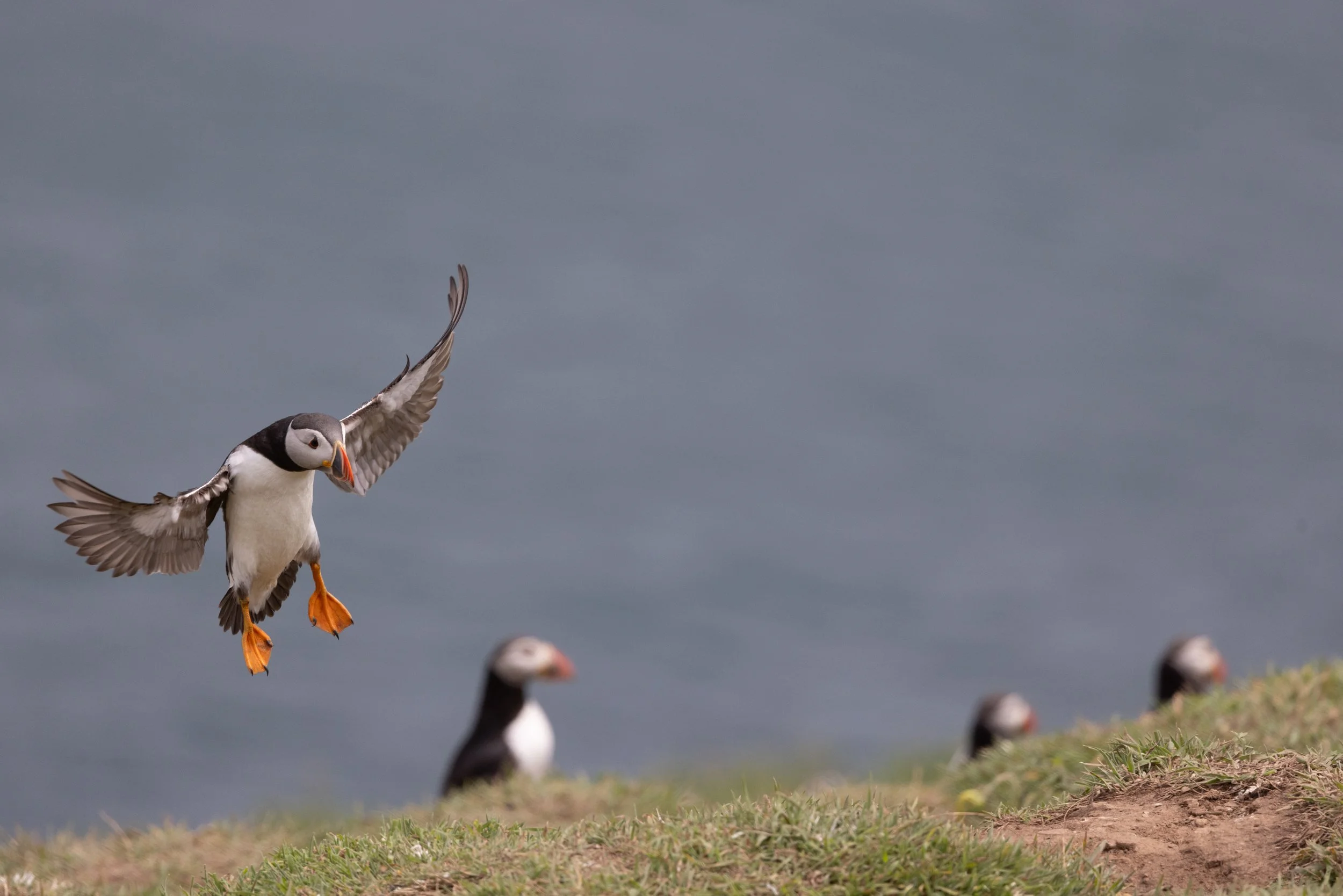
A brief arrival on the cliff edge — wings still open, feet reaching for stone, the sea behind. The colony is never still for long.
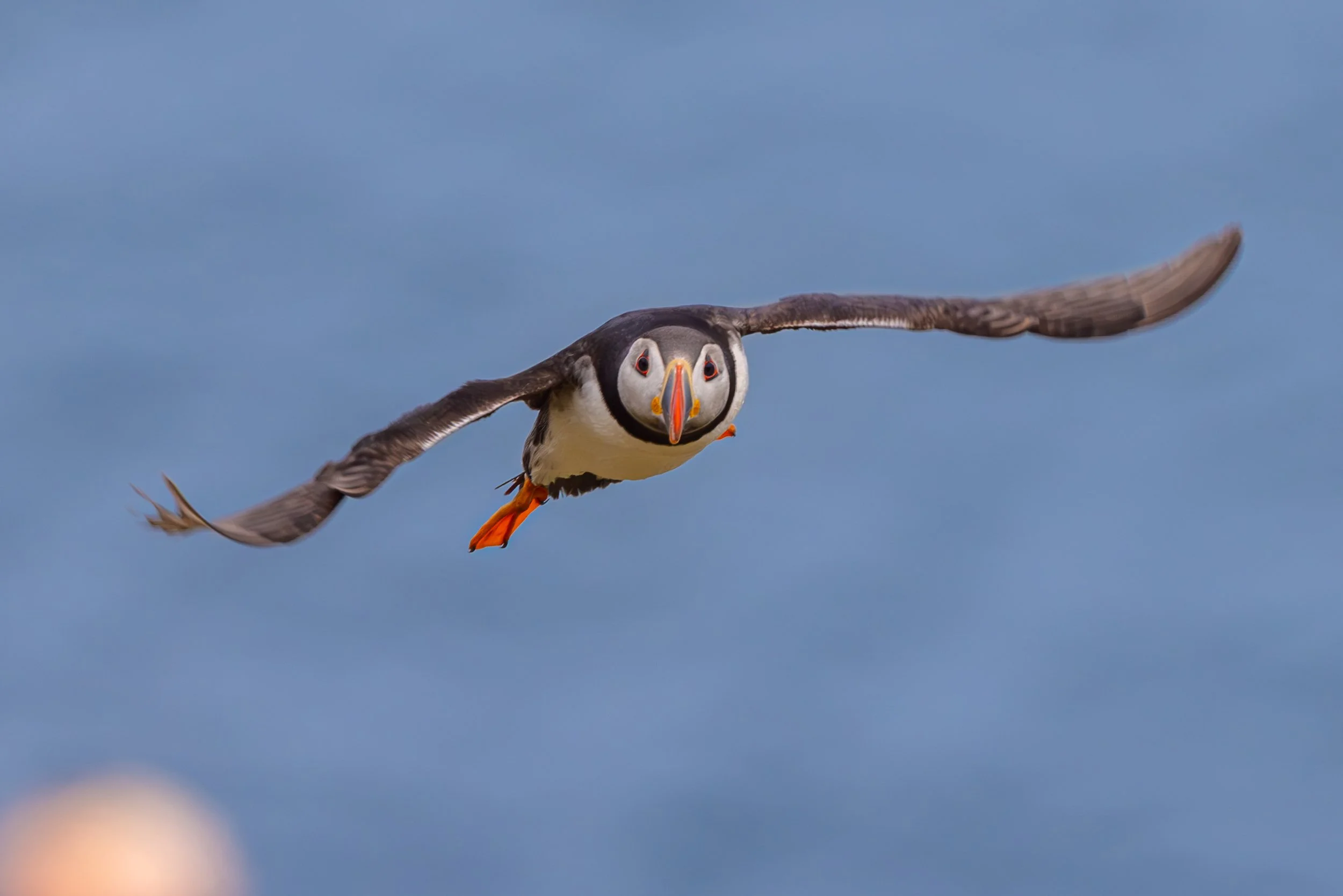
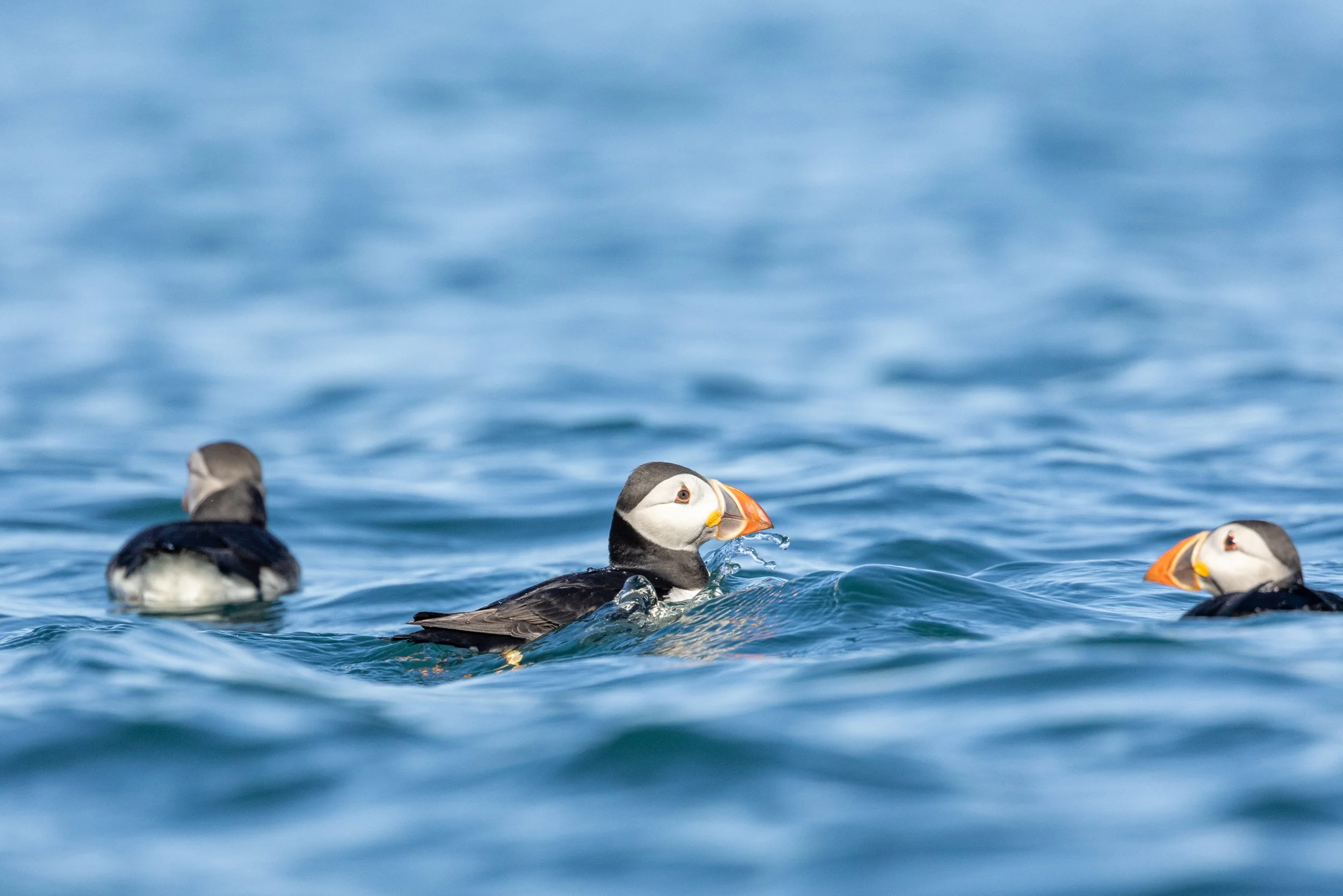
Gulls patrol the cliffs, watching for an opportunity to steal a hard-earned catch. Beneath the apparent chaos lies a finely adapted system shaped by instinct, timing and the demands of survival along the Atlantic edge.
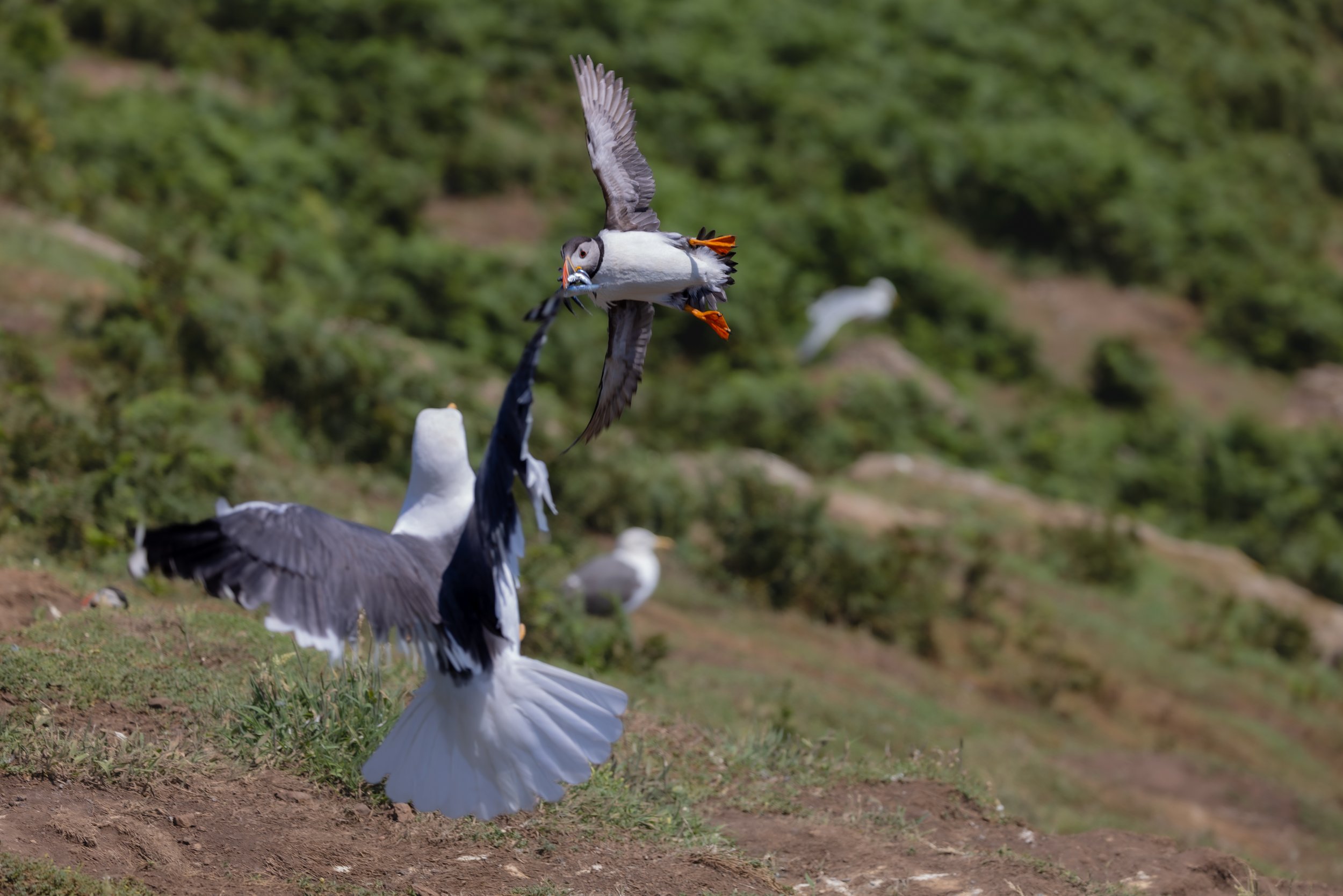
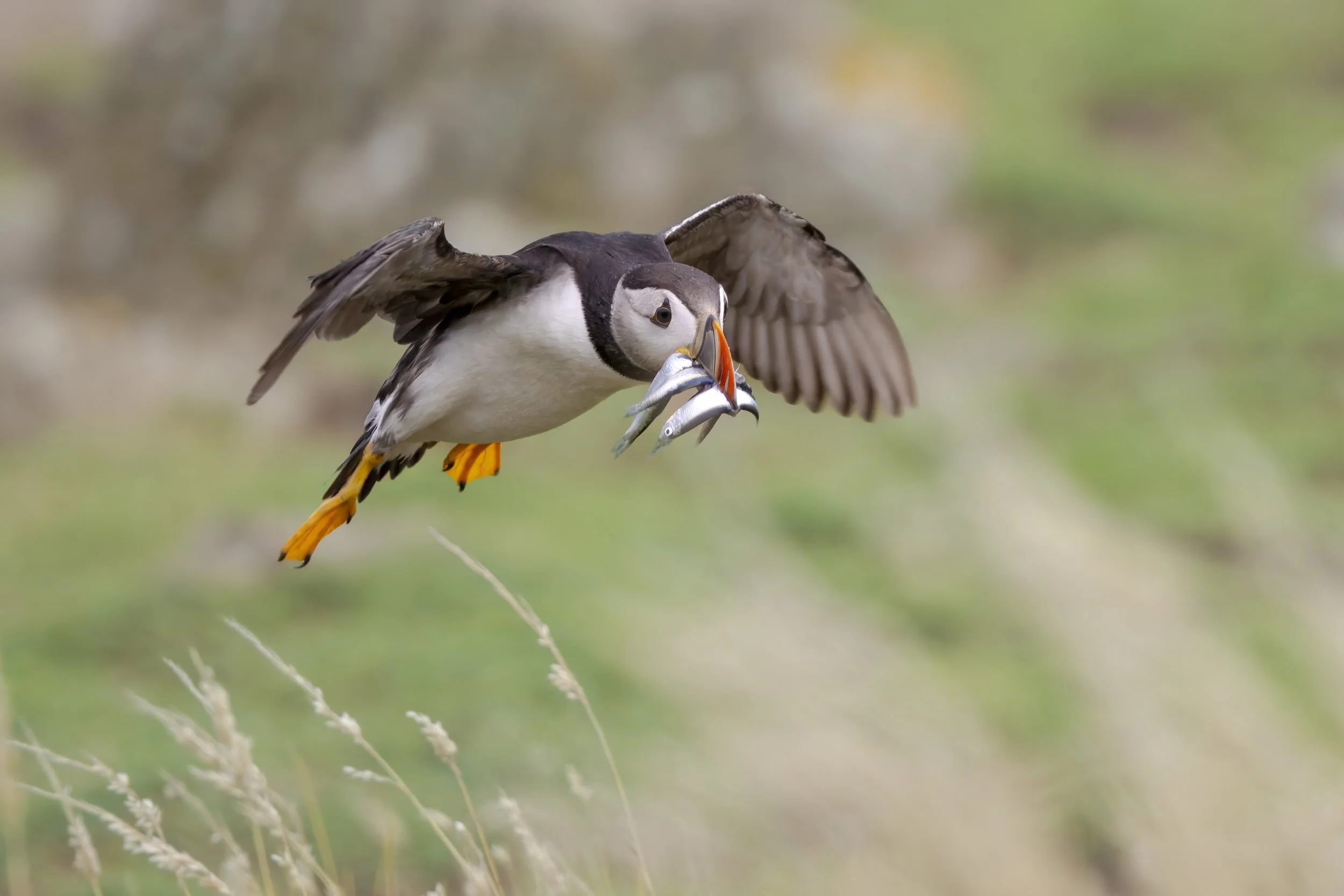
A returning adult approaches the colony while gulls patrol overhead. Landing close to the burrow reduces exposure time, yet even brief hesitation can attract attention. Foraging success must always be balanced against the risk of interception.
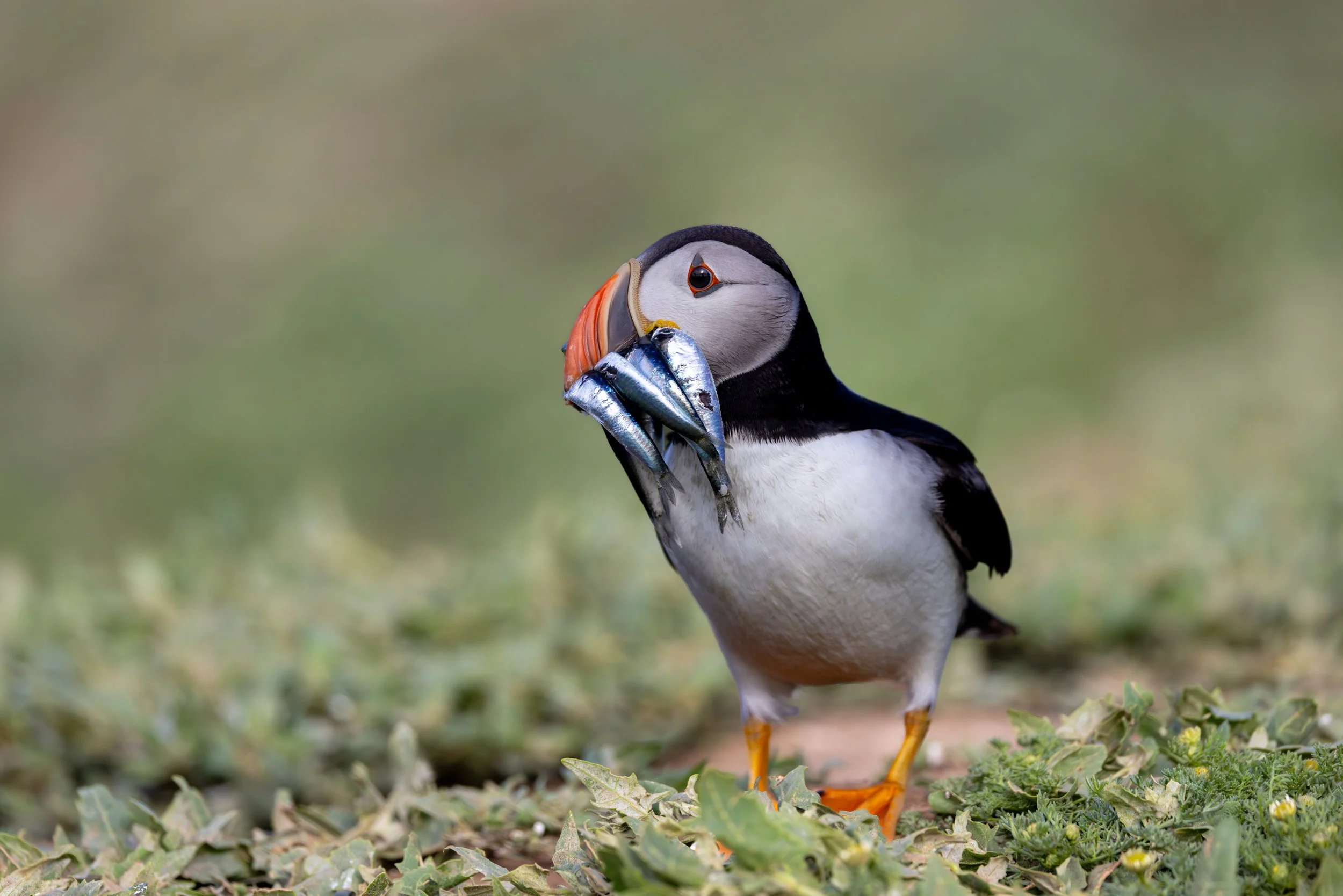
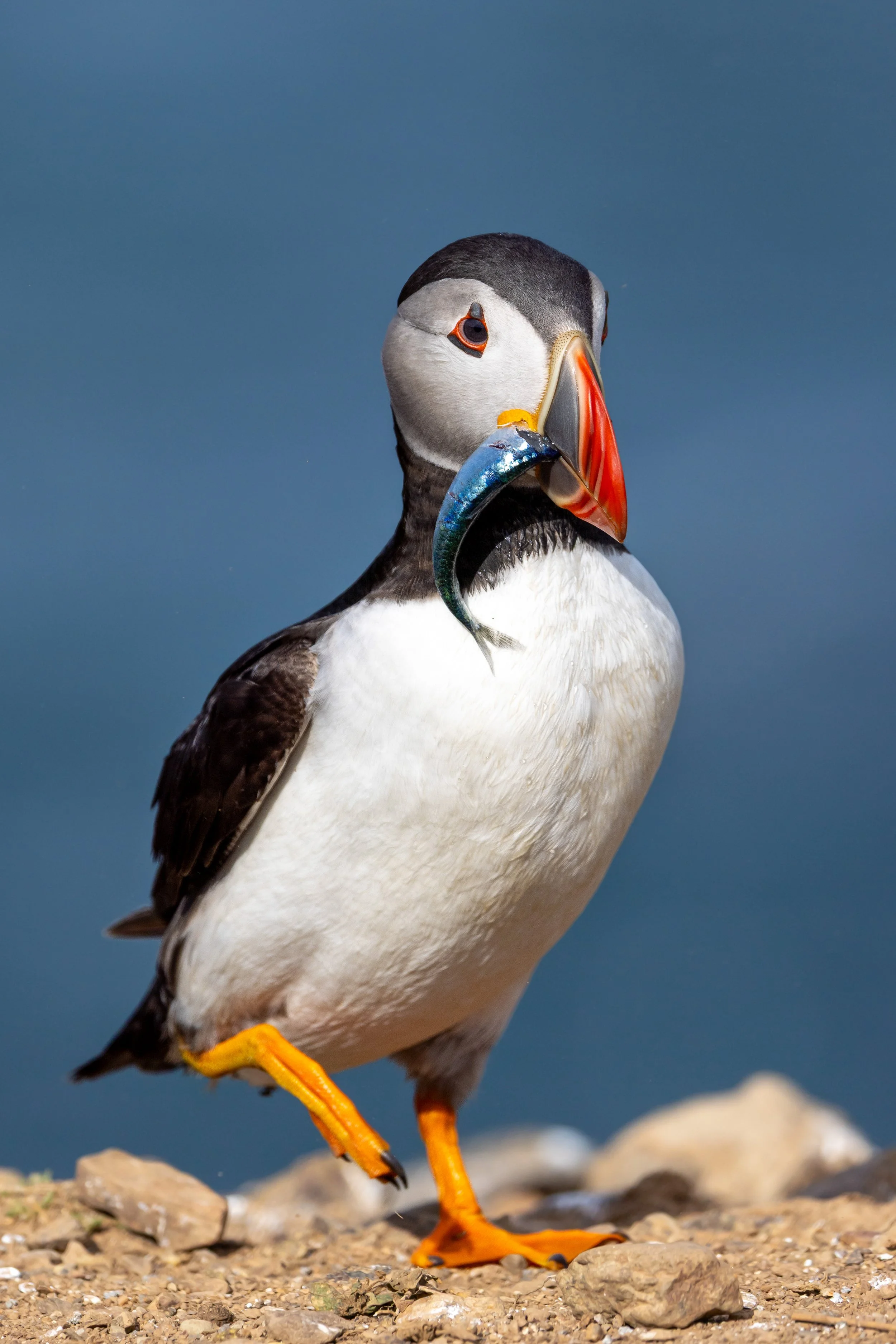
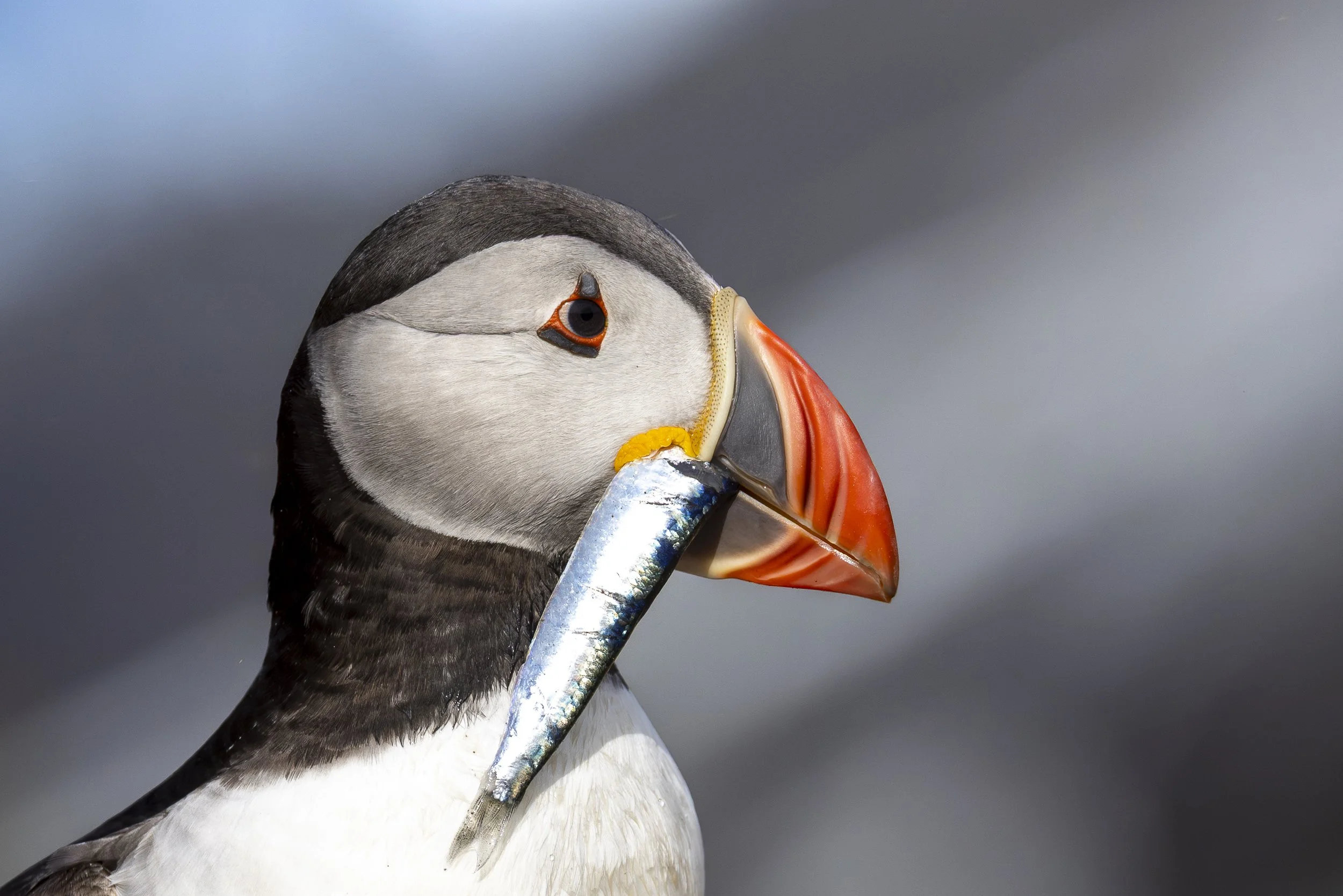
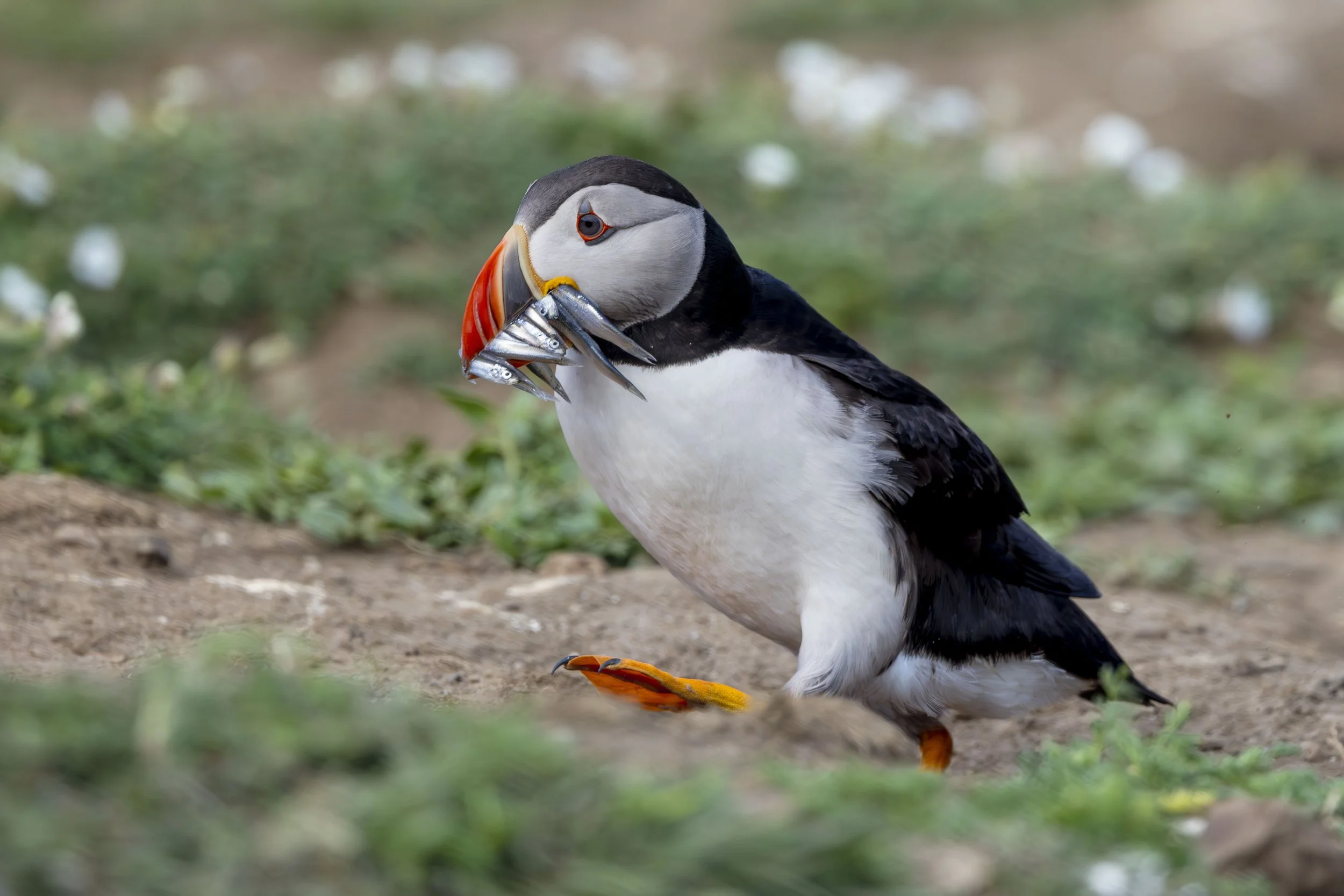
A beak full of sand eels. During the breeding season, adults can transport dozens of fish at once thanks to the unique structure of their beaks. This allows them to feed their growing chick with remarkable efficiency, fishing grounds are often far out.
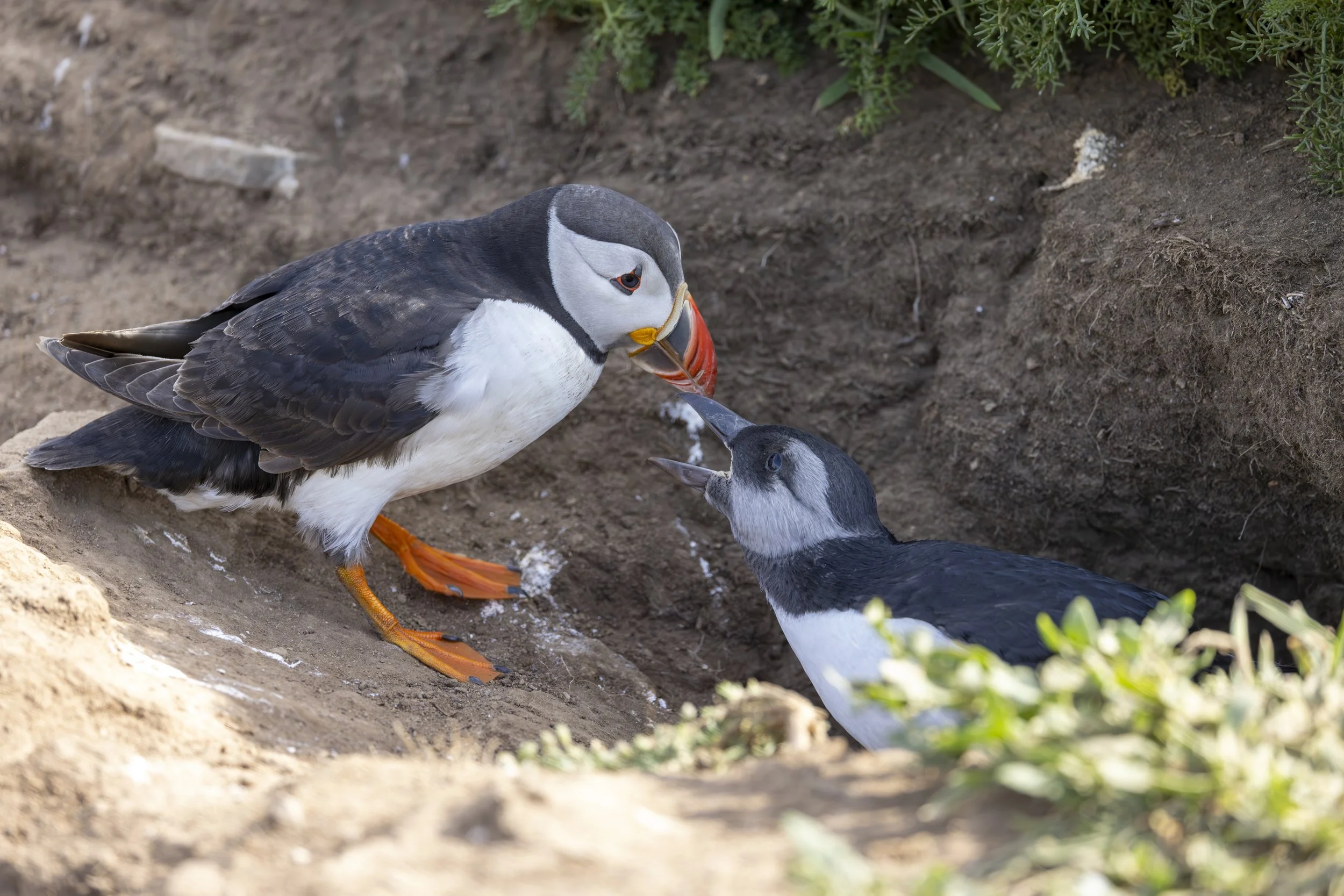
After the adult’s return, the chick appears briefly before retreating again. In a colony where movement above ground increases risk, time outside the burrow remains limited.

Within the burrow, proximity replaces visibility. Thousands of nesting pairs occupy the same hillside, each defending a narrow margin of space while maintaining the rhythm of feeding and guarding.
Beyond the constant movement, the colony is shaped by repeated social rituals — pair bonds renewed at burrow entrances, brief reunions between partners and the careful exchange of food for waiting chicks. Even within the noise and density of the cliffs, individual relationships remain central to the survival of the colony.
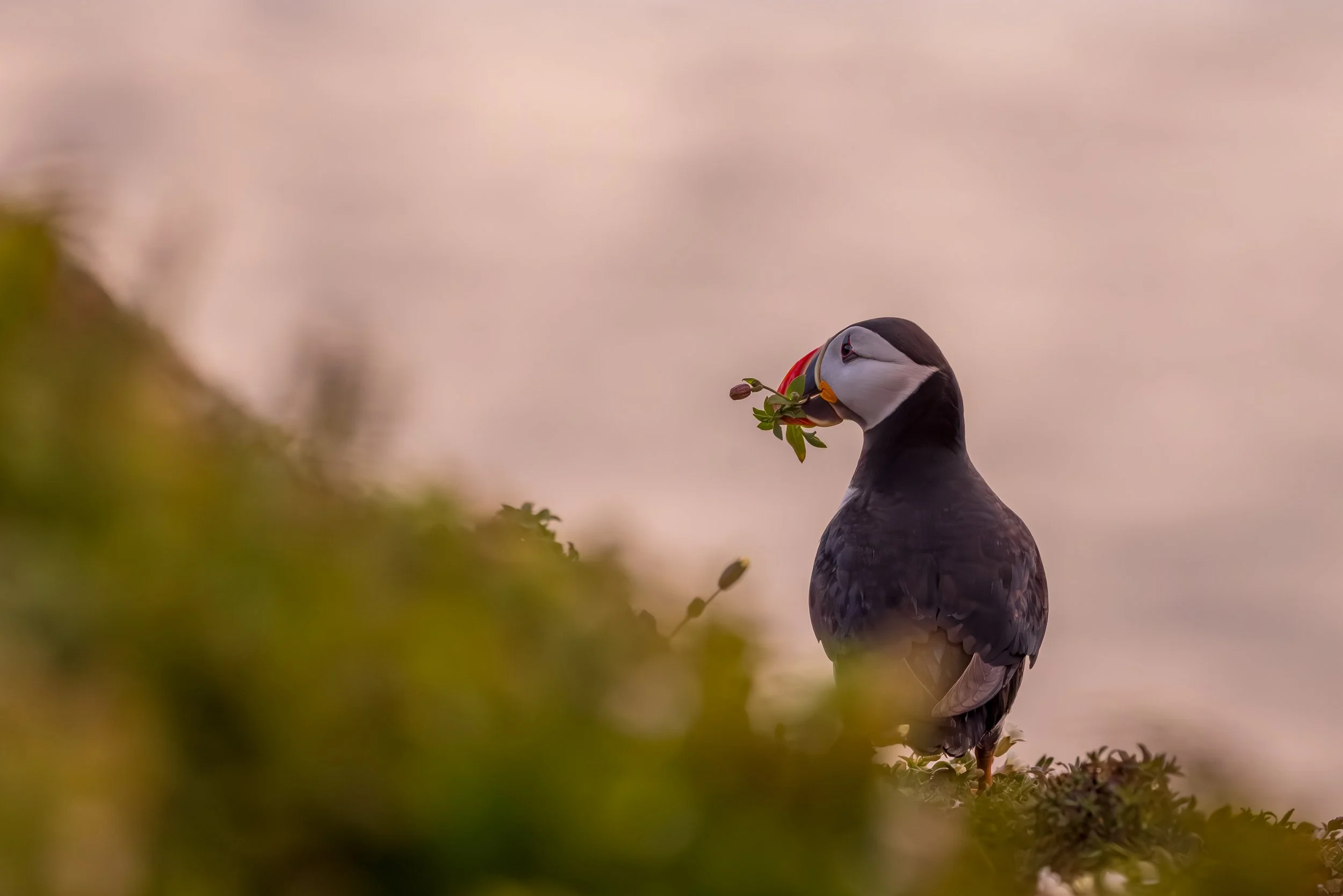

Another day coming to an end